- 9911151989, 9250091989, 9953020261
- 7 Days Open 10:30 Am - 8:30 Pm
We currently deliver exclusively within the Delhi-NCR region. For inquiries or delivery requests outside Delhi-NCR, please contact us on WhatsApp. We currently deliver exclusively within the Delhi-NCR region. For inquiries or delivery requests outside Delhi-NCR, please contact us on WhatsApp.
We currently deliver exclusively within the Delhi-NCR region. For inquiries or delivery requests outside Delhi-NCR, please contact us on WhatsApp. We currently deliver exclusively within the Delhi-NCR region. For inquiries or delivery requests outside Delhi-NCR, please contact us on WhatsApp.

📑 Table of Contents
- 1. Understanding Split ACs
- 2. What Is a Split AC?
- 3. How a Split AC Cools the Room
- 4. Why People Choose Split ACs
- 5. Choosing the Right Split AC
- 6. Picking the Right AC Tonnage
- 7. Inverter vs Non-Inverter Split AC
- 8. Understanding Star Ratings
- 9. Energy Terms to Know
- 10. Cooling Modes That Matter
- 11. Choosing the Right Features
- 12. Planning Installation
- 13.Installation Day Checklist
- 14. Using Your Split AC Properly
- 15.Maintenance and Cleaning
- 16. Common Problems and Simple Checks
- 17. Safety Tips
- 18. When to Call an AC Technician
- 19. Final Tips for Long AC Life
Understanding Split ACs
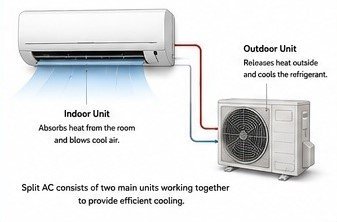
What a split AC ?
A Split AC is a cooling system made of two units that work together. The indoor unit sits inside your room and blows cool air, while the outdoor unit stays outside and releases the heat. Both units are connected through copper pipes and insulated wiring. This design helps the AC run quietly inside your home while still delivering strong cooling.
How a split ac cools the room?
A Split AC is a cooling system made of two units that work together. The indoor unit sits inside your room and blows cool air, while the outdoor unit stays outside and releases the heat. Both units are connected through copper pipes and insulated wiring. This design helps the AC run quietly inside your home while still delivering strong cooling.
Why people Choose split ACs
Most people prefer Split ACs because they cool faster, make less noise and look cleaner on walls. Inverter models are especially popular since they adjust their speed to match the room’s cooling needs, which can help reduce electricity use over time.
Choosing the Right Split AC
Picking the Right Tonnage
Tonnage is the basic measure of cooling capacity. A small bedroom usually needs around one ton, medium rooms often need one and a half tons and larger rooms may need two tons. The size of the room is the main factor, but things like heavy sunlight, top-floor heat and the number of people in the room can increase the requirement.
Inverter vs Non-Inverter
Inverter ACs change their compressor speed based on the room’s temperature. This helps maintain even cooling without sudden temperature jumps. Non-inverter ACs work at a fixed speed, which can cool fine but usually uses more electricity than inverter models.
Understanding Star Ratings
Star ratings give you an idea of how efficiently an AC uses electricity. A higher star rating usually means the AC will use less power for the same amount of cooling. Many buyers choose a five-star inverter AC for long-term savings.
Energy Terms to Know
You may come across words like ISEER, BTU and airflow. ISEER shows the efficiency of the AC over a full season. BTU is simply the measure of how much cooling the AC can provide. Airflow, marked in CFM, tells you how much air the AC can move each minute. Higher airflow often means faster and more even cooling.
Cooling Modes That Matter
Split ACs often come with modes that make life easier. Cool mode is the standard setting used on hot days. Dry mode helps lower humidity during sticky weather. Fan mode moves air without cooling it and sleep mode adjusts cooling at night to save electricity while keeping the room comfortable.
Choosing the Right Features
When comparing models, it helps to look for copper coils, dust filters, auto-restart options and stabilizer-free operation where available. Some units even offer WiFi control, which lets you operate the AC from your phone.
Planning for Installation
Picking the Right Wall for the Indoor Unit
The indoor unit works best when placed high on a wall where the cool air can travel across the room without hitting obstacles. Corners are not ideal, and walls exposed to heavy sunlight can affect cooling.


Choosing the Spot for the Outdoor Unit
The outdoor unit should be installed in a ventilated area where it can release heat easily. It needs a firm, stable base to prevent vibration. Covered boxes or cramped spaces can trap heat and reduce cooling performance.
Standard Pipe Length
Most ACs work best when the copper pipe connecting the two units is not unnecessarily long. Extra length can affect cooling and may require adjustments during installation.
Proper Drainage
Split ACs release water during cooling, so the indoor unit must have a free-flowing drain pipe. If the pipe gets blocked or bent, it can cause water to drip inside the room.
Electrical Requirements
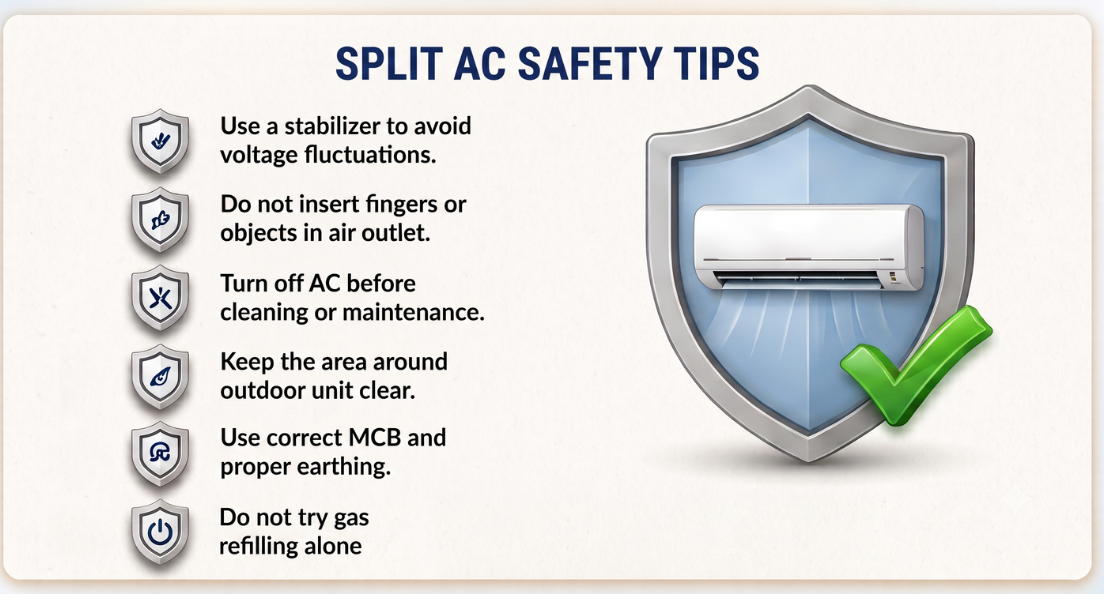
Before installation, it helps to have a proper power outlet ready. The AC should have safe wiring and steady voltage. Many modern ACs claim stabilizer-free operation, but a stabilizer may still be useful in areas with frequent voltage drops.
Installation Day Checklist (What to Expect and Things you should check)
- On installation day, the technician will mount both units, connect them with copper pipes and ensure that air and moisture are removed from the system before starting it. The cooling test is an important part of the process because it confirms that everything is running correctly.
-
Things You Should Check
Once installation is complete, observe whether the indoor unit is level and draining water properly. Make sure the outdoor unit is steady and not vibrating too much. It is also useful to check that there are no gaps around the wall opening and that the AC starts cooling without unusual noise.
Using Your Split AC Properly
Using Your Split AC Properly
Most homes feel comfortable at around twenty-four to twenty-six degrees Celsius. Higher temperatures reduce electricity consumption and still keep the room pleasant.
Using the Remote Smartly
Your remote has several settings that can make cooling better. Swing mode helps spread air around the room. Higher fan speeds cool faster. Sleep mode adjusts cooling gently through the night so you stay comfortable without wasting energy.
Cleaning Filters
The filters inside the indoor unit collect dust and need to be cleaned regularly. If they get too dirty, the AC has to work harder, which increases electricity use and reduces cooling.
Outdoor Unit Care
The outdoor unit also needs space to breathe. Leaves, dust or anything that blocks airflow can affect cooling. Keeping the surrounding area clear helps the unit work smoothly.
Yearly Servicing
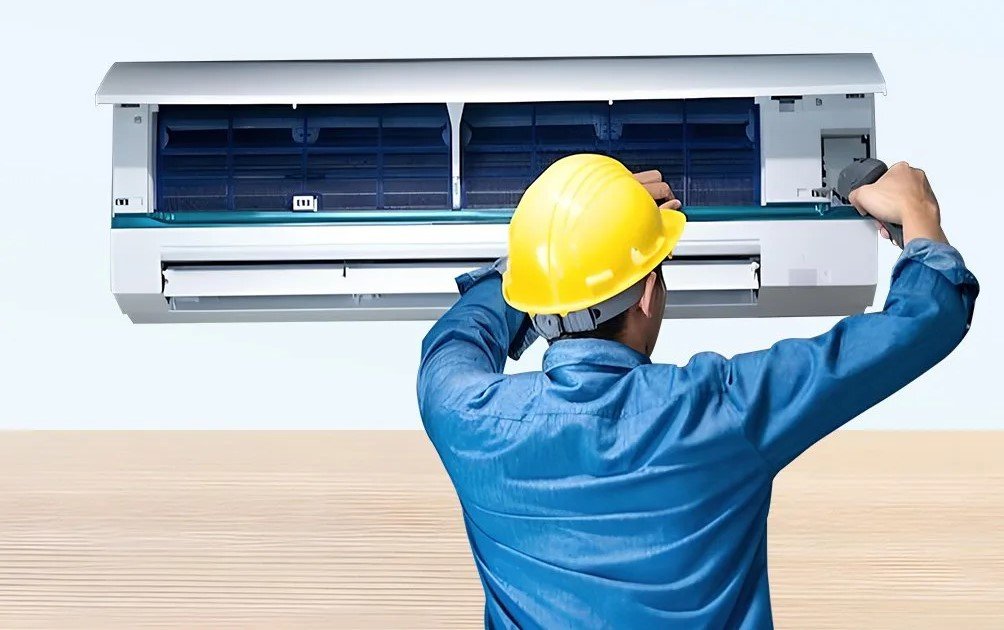
A full service once a year is helpful. Technicians check gas pressure, clean the coils, inspect wiring and make sure drainage is smooth. Regular servicing helps maintain performance and extends the life of the AC.
Common Problems and Simple Checks
AC Not Cooling Enough
If the AC feels weak, check the filters first. Make sure the room is closed and the temperature is set correctly. Also confirm that the outdoor unit has enough space around it.
Water Dripping Indoors
Dripping usually happens when the drain pipe is blocked or the indoor unit is not level. Dust on the cooling coils can also cause moisture issues.
Unusual Noise
Any new or strange noise is worth noting. It may come from loose screws, vibration or something stuck in the fan.
Bad Smell When Running
Dust and moisture inside the unit can create smell. Cleaning the filters and keeping the indoor area dry usually fixes this.
Final Tips for Long AC Life
Frequently Asked Questions About Split ACs
Find answers to the most common questions about Split Air Conditioners, including how they work, energy consumption, installation, maintenance, cooling performance, and buying the right AC for your home or office.
Q1. What is a Split AC and how does it work?
A Split AC consists of an indoor unit and an outdoor unit. The indoor unit absorbs heat from the room, while the outdoor unit releases it outside using a refrigerant cycle. This design provides faster cooling, quieter operation, and better energy efficiency than many traditional air conditioning systems.
Q2. Which AC consumes less electricity: Split AC or Window AC?
Modern Inverter Split ACs generally consume less electricity than Window ACs because they automatically adjust compressor speed according to cooling demand. Choosing a higher BEE Star Rating can further reduce electricity bills.
Q3. What size Split AC should I buy?
The ideal AC capacity depends on room size. A 1 Ton AC is suitable for rooms up to 120 sq. ft., a 1.5 Ton AC for rooms between 120 and 180 sq. ft., and a 2 Ton AC for rooms up to 250 sq. ft. Larger rooms or spaces with direct sunlight may require a higher-capacity unit.
Q4. How often should I service my Split AC?
Clean the air filters every 2 to 4 weeks and schedule professional servicing every 6 to 12 months. Regular maintenance improves cooling performance, energy efficiency, and extends the life of the air conditioner.
Q5. Does a Split AC consume a lot of electricity?
Electricity consumption depends on the AC capacity, star rating, inverter technology, and usage. A 5-Star Inverter Split AC generally consumes much less electricity than a non-inverter model.
Q6. Why is my Split AC not cooling properly?
Poor cooling is usually caused by dirty filters, low refrigerant levels, blocked condenser coils, thermostat issues, or compressor problems. Regular servicing helps identify and resolve these issues.
Q7. What is the ideal temperature setting for a Split AC?
The recommended temperature is between 24°C and 26°C. This provides comfortable cooling while reducing electricity consumption and improving energy efficiency.
Q8. Can a Split AC run continuously for 24 hours?
Yes. A properly installed and maintained Split AC can run continuously if needed. Keeping the temperature between 24°C and 26°C and cleaning the filters regularly improves efficiency and reduces unnecessary power consumption.
Q9. Why does my Split AC smell bad?
Bad odours are usually caused by dirty air filters, moisture inside the indoor unit, mould growth, bacteria, or a clogged drain pipe. Regular cleaning and servicing help eliminate unpleasant smells.
Q10. Why is my Split AC leaking water?
Water leakage is commonly caused by blocked drain pipes, dirty filters, frozen evaporator coils, or improper installation. Preventive maintenance helps avoid most leakage problems.
Q11. How often should Split AC filters be cleaned?
During regular use, clean the air filters every 2 to 4 weeks. Clean filters improve airflow, indoor air quality, cooling performance, and energy efficiency.
Q12. Does turning the AC on and off save electricity?
Not always. Inverter Split ACs are designed to adjust compressor speed automatically and are usually more energy-efficient when maintaining a constant temperature than repeatedly switching the AC on and off.
Q13. How long does a Split AC compressor last?
With proper maintenance, a Split AC compressor typically lasts between 10 and 15 years. Regular servicing, stable voltage, and timely cleaning help extend its lifespan.
Q14. Which Split AC is best for home use?
The best Split AC depends on your room size, budget, and energy efficiency requirements. An Inverter Split AC with a copper condenser and a high BEE Star Rating is generally recommended for most homes.
Q15. Is an Inverter Split AC worth buying?
Yes. Although an Inverter Split AC costs more initially, it offers faster cooling, quieter operation, lower electricity bills, and better long-term performance, making it a worthwhile investment.
Q16. What are the benefits of using a Split AC?
A Split AC offers faster cooling, quieter operation, better energy efficiency, flexible installation, improved air circulation, and an attractive design. Modern Inverter models also help reduce electricity costs while providing consistent indoor comfort.
Final Buying Advice
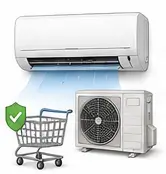
- Choose the right capacity for your room.
- Go for Inverter AC for long-term savings.
- Prefer higher star rating for energy efficiency.
- Ensure good after-sales service.
- Buy from a trusted and reliable brand.
Smart choice today, cool comfort for years!